

Migration Safari in Tanzania: Witnessing the Great Migration in the Serengeti
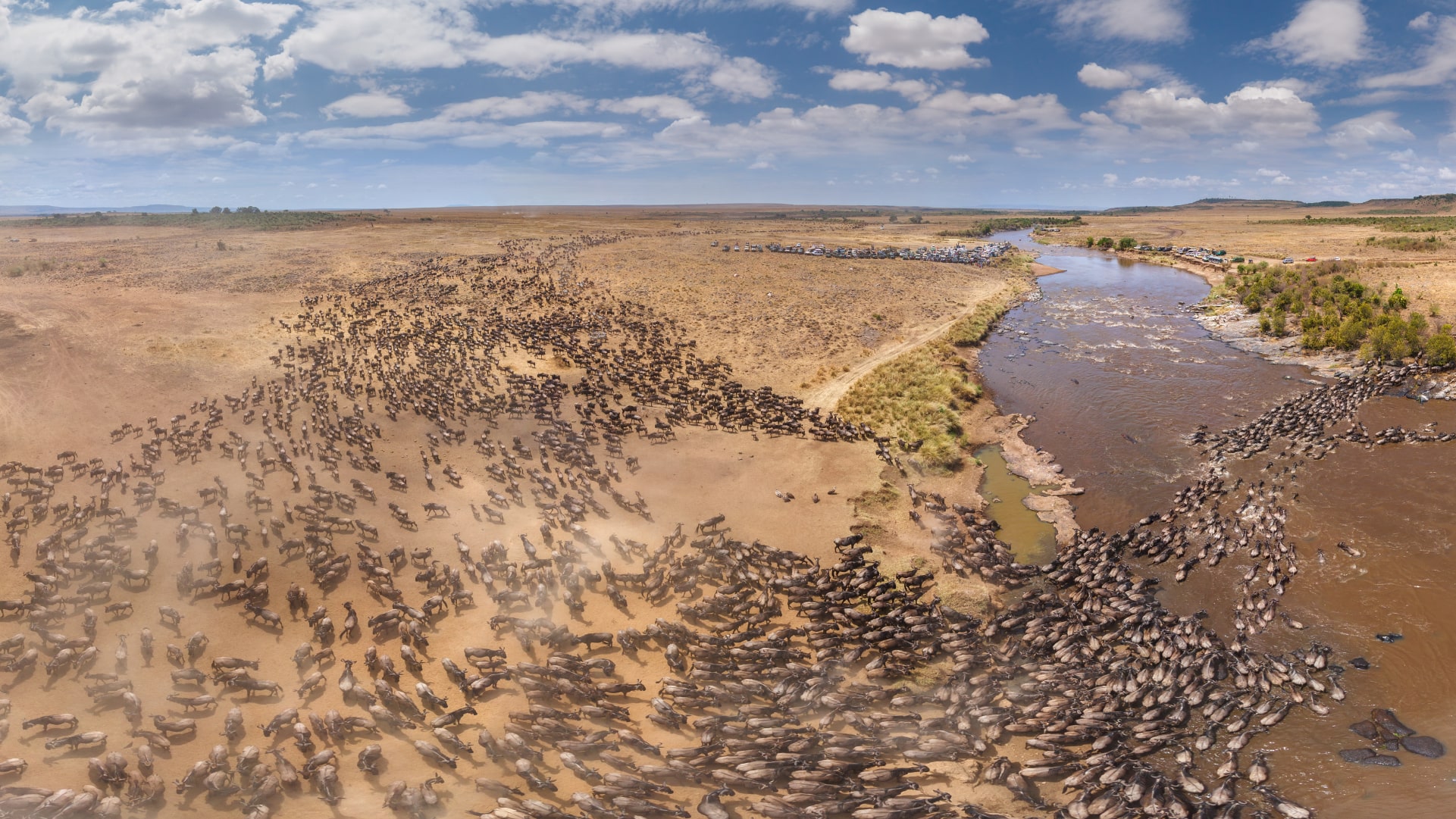
A migration safari in northern Tanzania is widely regarded as one of the most compelling wildlife experiences available anywhere. At the center of this phenomenon is Serengeti National Park, an expansive ecosystem where the annual movement of wildebeest, zebras, and gazelles unfolds across vast savannahs. This event commonly referred to as the Great Migration is not a single moment but a continuous, cyclical process driven by rainfall patterns, grazing availability, and survival dynamics.
For travelers planning a safari in 2026, understanding the structure and timing of this migration is essential. The experience varies significantly depending on the month, location within the Serengeti, and prevailing environmental conditions. A well-planned itinerary allows visitors to observe different phases of the migration, each offering distinct ecological and visual characteristics.
Understanding the Migration Cycle
The migration is fundamentally a response to seasonal rainfall. Wildebeest depend on short, nutrient-rich grasses that emerge after rains. As these grazing resources are depleted, the herds move in search of new pastures. This creates a roughly circular migration route through the Serengeti ecosystem and into Kenya’s Maasai Mara before returning south again.
From December to March, the herds concentrate in the southern Serengeti plains. This period coincides with the calving season, when hundreds of thousands of wildebeest give birth within a relatively short timeframe. The abundance of fresh grass supports lactation, while the open plains provide visibility that reduces predation risk for newborn calves.
By April and May, as the rains shift, the herds begin moving northwest toward the central and western Serengeti. This phase is characterized by long columns of animals stretching across the horizon. The landscape becomes greener but more challenging to traverse due to seasonal rains, making this a quieter period for tourism but still ecologically significant.
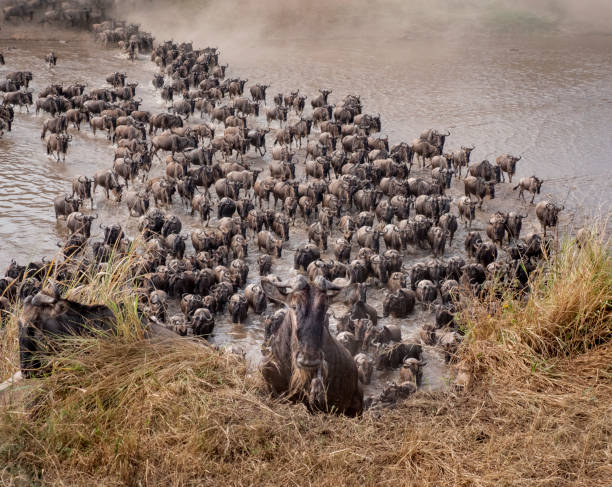
Between June and October, the migration reaches its most dramatic phase in the northern Serengeti. Here, the herds encounter major river systems, including the Mara River. Crossings are unpredictable and often intense, as animals must navigate strong currents and predators such as crocodiles. This period is widely considered the peak safari season due to high wildlife density and increased predator activity.
In November, the cycle begins to reset as short rains draw the herds back southward, completing the migration loop.
What to Expect on a Migration Safari
A migration safari is not limited to observing movement alone. It provides a comprehensive view of ecosystem dynamics, including predator-prey interactions, herd behavior, and landscape variation. Lions, hyenas, cheetahs, and leopards closely follow the herds, creating frequent opportunities to observe hunting strategies and social behavior.
The scale of the migration is a defining feature. Large herds move in coordinated patterns, often forming dense clusters that stretch for kilometers. The soundscape hoofbeats, vocalizations, and movement through grasslands adds a sensory dimension that is difficult to replicate elsewhere.
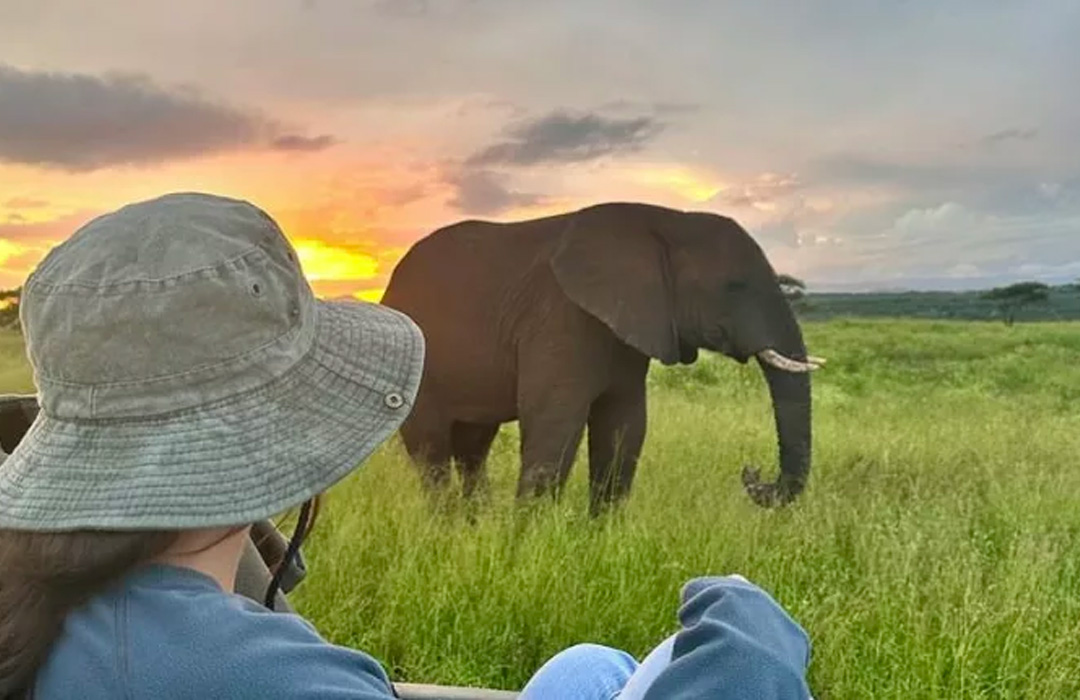
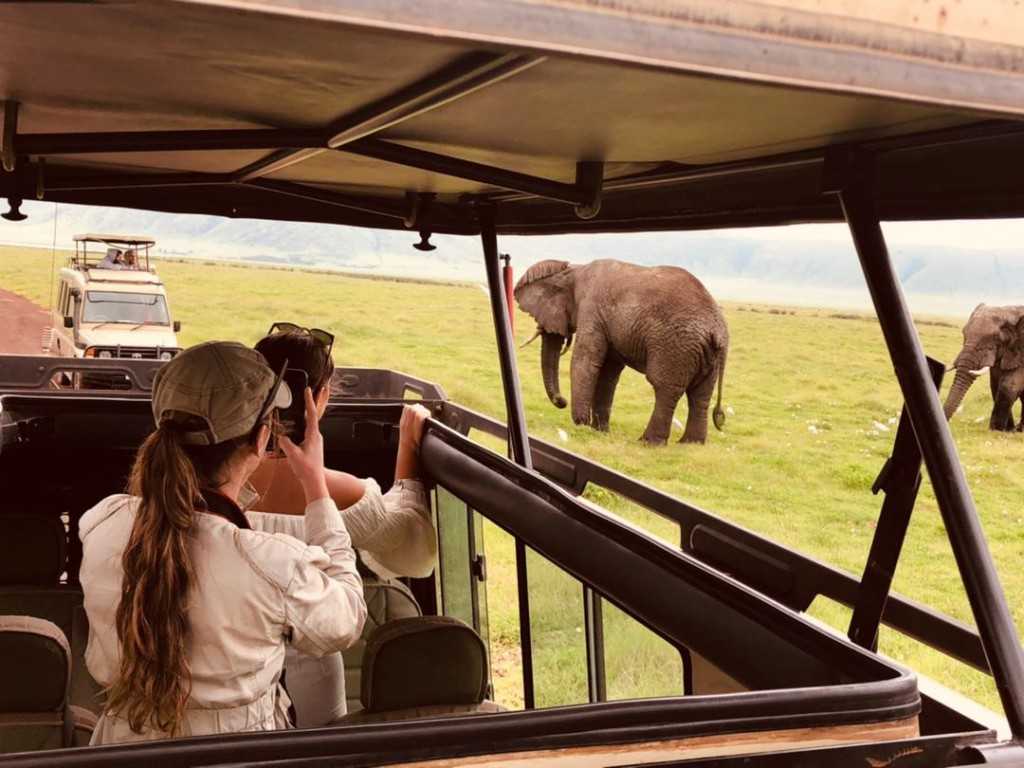
Game drives remain the primary mode of exploration. These are typically conducted in specialized safari vehicles designed for visibility and off-road capability. Experienced guides play a critical role, using knowledge of animal behavior and terrain to position vehicles effectively.
For a different perspective, hot air balloon safaris offer an aerial view of the migration. From above, the structure and flow of the herds become more apparent, revealing patterns that are not visible from ground level. This option is often scheduled at sunrise, when lighting conditions are optimal and wildlife activity is high.
Best Time for a Serengeti Migration Safari in 2026
Selecting the appropriate time for a migration safari depends on what aspect of the migration you intend to observe. Each phase offers distinct advantages:
- Calving Season (January–March): High concentration of animals in the southern plains, with frequent predator interactions.
- Movement Phase (April–May): Large-scale herd movement with fewer tourists, though weather conditions can be variable.
- River Crossings (June–October): Peak dramatic activity in the northern Serengeti, including Mara River crossings.
- Return Phase (November–December): Transitional movement back to the south, often accompanied by renewed rainfall.
For 2026, early booking is advisable, particularly for peak months. Accommodation in key migration such as the northern Serengeti tends to fill quickly due to high demand.
Planning and Logistics
A successful migration safari requires coordination across several components: transport, accommodation, guiding, and timing. Most itineraries begin in Arusha, which serves as the primary gateway to northern Tanzania. From there, travelers can access the Serengeti by road or domestic flight.
Accommodation options range from mobile tented camps that follow the migration to permanent lodges offering higher levels of comfort. Mobile camps are particularly effective for staying close to herd , as they relocate based on migration patterns.
Professional guides are essential. Their ability to interpret animal behavior, track movement, and communicate with other guides enhances the likelihood of meaningful sightings. In addition, private safaris provide greater flexibility in scheduling and route selection compared to group tours.
Travelers should also account for park fees, internal flights (if applicable), and seasonal pricing variations. Dry season months typically carry higher costs due to demand, while shoulder seasons may offer more favorable pricing with fewer visitors.
Conclusion: A Strategic Wildlife Experience
A migration safari in Serengeti National Park is not simply a it is an observational experience grounded in ecological processes. The movement of wildebeest herds reflects a finely tuned response to environmental conditions, shaped by evolution and sustained by the integrity of the Serengeti ecosystem.
For 2026 travelers, this presents an opportunity to engage with one of the most dynamic wildlife systems on the planet. With appropriate planning, informed timing, and experienced guidance, a migration safari offers a structured yet immersive encounter with nature at scale.
Our recommended safari package for you
Contact Us for the Best Choice of Your Safari